
2026-10-06 · Kai Kalama
AC Condensation Problems During Mililani Wet Season
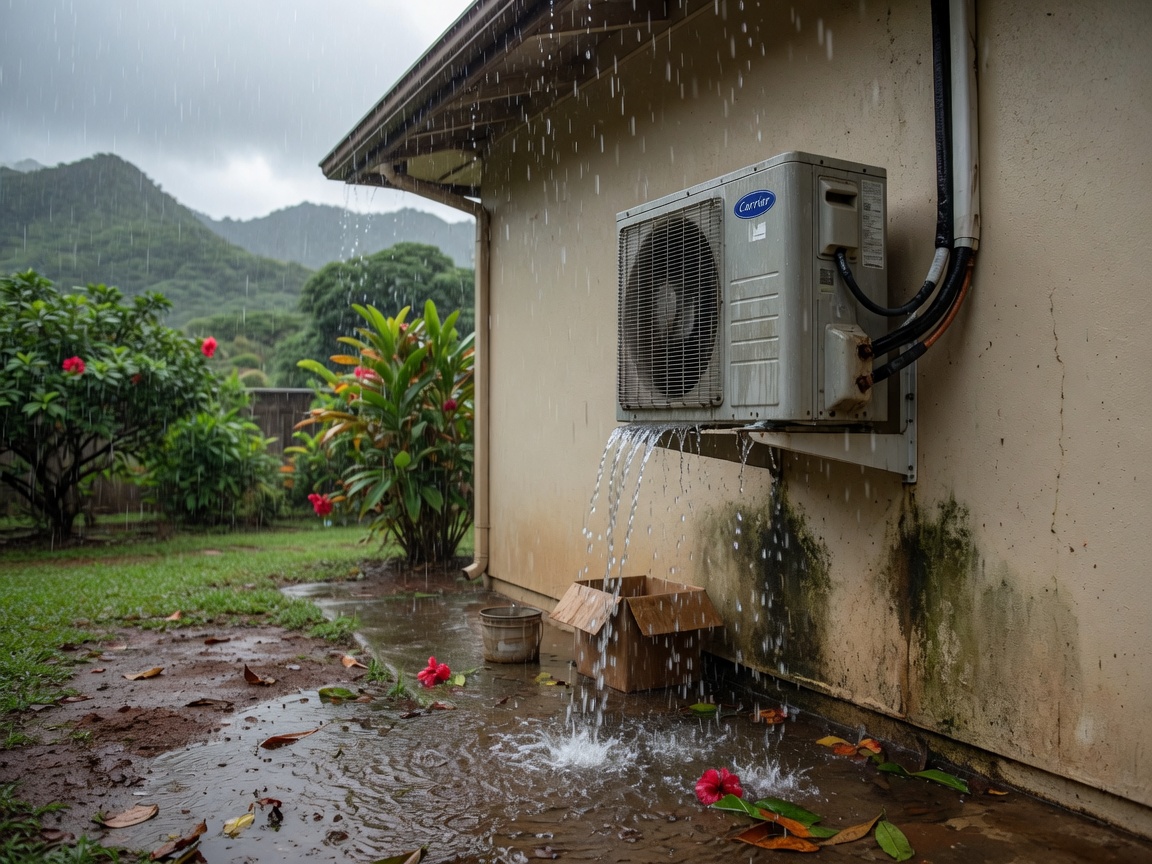
AC condensation problems appear most often in Mililani between November and April when rainfall increases and humidity stays elevated. The tropical climate keeps outdoor temperatures in the 70s to 80s year-round, so systems run continuously and produce more moisture than the drain lines can handle in older single-family homes built in the 1980s and 1990s around Mililani Town Center.
Why Trade Winds and Rain Increase Condensation Load
Trade winds normally help dry coils in Central Oahu, yet during wet-season downpours the air entering the unit carries extra moisture that condenses faster on the evaporator coil. Homes near Mililani Golf Club sit on slightly lower terrain where morning fog lingers, forcing the system to remove an extra 10–15 pints of water per hour compared with drier months. This added load often exceeds the capacity of 3/4-inch drain lines installed when many Mililani Mauka houses were built, leading to standing water in the pan within 24–48 hours of heavy rain.
Residents in Mililani Tech Park notice the same pattern because commercial roofs and parking lots funnel runoff that raises local humidity for several blocks. The continuous operation required to maintain 72–74 °F indoors leaves little time for the coil to dry between cycles, so microbial growth starts on the fins within two weeks if airflow drops below 350 cfm per ton.
Common Signs in Honolulu County Housing Stock
Water stains on ceilings below attic units appear first in split-level homes common throughout Mililani Town. Homeowners also report musty odors from the return grille after three or more consecutive rainy days because the condensate pan overflows onto insulation. In Waipahu and Wahiawa commuters who leave for work early often miss the early drip sounds until the overflow switch trips and shuts the system down during peak evening heat.
Checking the primary drain line at the exterior wall every month reveals slow flow caused by algae that thrives in the 75 °F condensate typical here. Secondary float switches installed on units older than eight years prevent major ceiling damage when the main line clogs during a sudden 2-inch rainfall event.
Practical Steps to Reduce Wet-Season Condensation
Start by verifying that the condensate drain slopes at least 1/4 inch per foot from the air handler to the exterior termination point. Next, pour a 50/50 mix of water and white vinegar through the access port monthly to keep algae from forming inside the line. Installing a dehumidifier sized for 50–70 pints per day alongside the existing AC lowers the load on the evaporator coil and keeps indoor relative humidity under 55 % even when trade winds weaken.
Scheduling AC maintenance before November allows a technician to clean the coil, confirm proper refrigerant charge, and test the float switch so the system handles the wet-season moisture without overflow. Homeowners who notice water near the air handler should call for AC repair immediately rather than waiting for the next dry spell.
When Replacement Becomes the Better Option
Systems older than 12 years with repeated drain clogs often benefit from a new high-efficiency air handler that includes a larger condensate pan and improved coil design. Replacement also allows upsizing the drain line to 1 inch and relocating it for better slope in homes where original installation followed the slab rather than the roof pitch. In Mililani Mauka neighborhoods where many units sit in low attics, this upgrade reduces service calls during the wet season by more than half according to local call patterns.